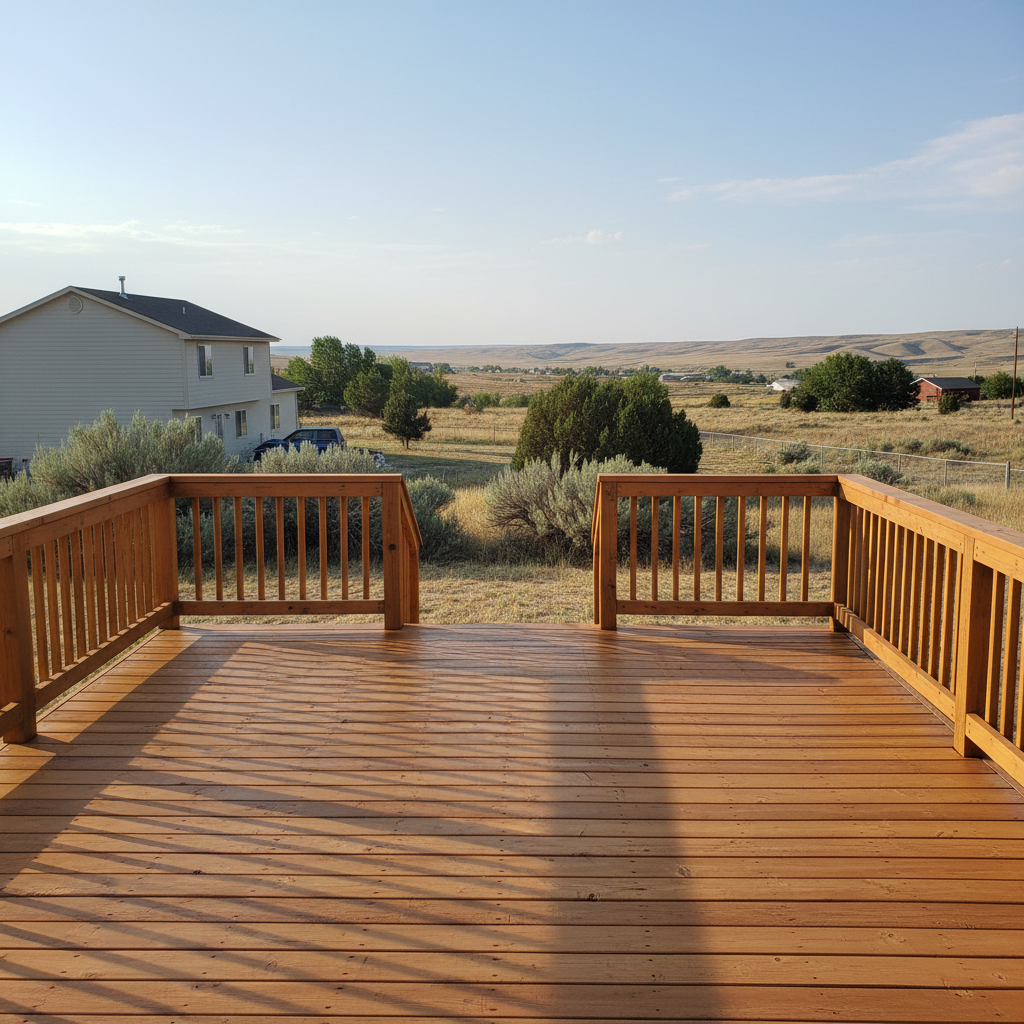
When you walk out onto your back porch on a crisp Roosevelt morning and feel a soft dip under your boot, you might wonder how long that board has been rotting. Out here in the Uinta Basin, our weather does not do things halfway. We get baking summer highs that fry wood finishes, followed by heavy winter freezes that test every fastener and joist on your property. If you want your outdoor living space to survive more than a few seasons, you have to stay ahead of the upkeep.
What Regular Maintenance Looks Like in the Basin
Routine care is not just about making things look pretty for a weekend barbecue. It is about stopping moisture and intense sun from tearing your framing apart. Every spring, once the snow clears off the benchlands, grab a broom and clear out all the accumulated organic debris trapped between your deck boards. Left alone, that damp dirt holds moisture right against the wood grain and speeds up decay.
Homeowners in Roosevelt must also wash down the surface annually and keep a close eye on protective finishes. Because our high-altitude sun is brutal on stains and sealers, waiting three or five years between coats is a recipe for splintered wood. Coastal Deck Solutions usually tells property owners to inspect protective coatings every year and plan on a fresh application of stain or sealer much sooner than the national paint cans claim.
Warning Signs Your Deck Needs Attention
Ignoring small problems out here is a fast track to a much bigger wallet hit later on. You need to look past the surface boards and check the actual health of the structure. Here are a few red flags that mean trouble:
- Fasteners that keep popping up or rusting through the wood surface due to winter freeze-thaw expansion.
- A spongy or soft feeling near post bases, ledger boards, or stair stringers where moisture likes to sit.
- Warped, cupped, or cracked boards that refuse to lay flat even after being re-secured.
- A railing system that wobbles or gives way when you lean your weight against it.
If you spot white, powdery mold or dark rot patches underneath your deck where the shade lingers, moisture is trapped in the framing. That is rarely something a quick tube of wood filler can solve.
Extending the Life of Your Deck Repairs
When you finally get around to fixing damaged sections, do not cut corners on materials or methods. Always use hot-dipped galvanized or exterior-grade structural screws that can handle pressure-treated lumber without shearing off when the temperature drops. If you are swapping out rotted deck boards, make sure your flashing is intact so water drains away from the house instead of soaking right into your rim joist. Simple habits like using a plastic shovel during winter snow removal instead of a metal edge will also keep your surface coatings from gouging and letting water in.
When to Call a Professional
Some weekend projects are fine to tackle with a drill and a Saturday afternoon free. But structural integrity is a different story. If your support posts are shifting, your ledger board is pulling away from the house, or you are looking at widespread rot across the main joists, it is time to call in some backup. Working with a local crew ensures the job meets proper building standards and stands up safely to whatever our Roosevelt seasons throw at it next.